
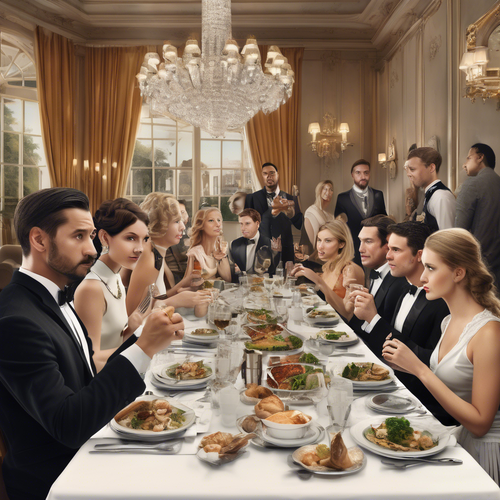
Miss Manners: Does My Restaurant Habit Warrant Such Glaring Disapproval? 🍽️🤔
Dining out—a delightful ritual steeped in culinary exploration—has morphed into a social minefield, where every forked bite could lead to disapproving side-eyes from fellow patrons. But are our restaurant habits truly deserving of such scrutiny, or are we simply caught in the crossfire of subjective taste and modern etiquette? 😅
Consider this: in the age of social media, where every meal is an opportunity for Instagram validation, it is both ironic and telling that one might feel compelled to evaluate every mannerism while dining. In a world that champions self-expression, how can one’s personal dining habits provoke such universal disdain? 🍔
The Ritual of Dining: Tradition Meets Modernity
The experience of dining out, akin to a ceremonial gathering around a communal fire, contrasts sharply with our technological age—where screens monopolize attention like a jealous partner. Not long ago, the act of sharing a meal embodied connection and conversation; now, it seems to teeter on the brink of absurdity. Is it not a peculiar paradox that in venues designed to foster interpersonal connections, many sit in isolation, heads bowed to glowing screens? 📱
When Eating Becomes a Spectacle
To some, the choice to document every moment (from appetizer to dessert) may be an innocent display of enthusiasm for culinary artistry. Yet the backlash is palpable; traditionalists may scoff, arguing that such behaviors distance us from the essence of dining—intimacy and presence. In this clash of perspectives lies a striking antithesis: personal expression versus social etiquette. Are we losing the plot amidst our attempts to capture the perfect shot? 🍰
Consider this: many establishments invite diners to savor the experience, each bite a melody in the symphony of taste and texture. The sound of laughter mingling with clinking glasses creates a sonorous backdrop. However, when the focus shifts to filtering the right shade of crème brûlée against a marble countertop, one might wonder if the meal has become secondary to the performance.
Common Offenses: An Etiquette Chart of Modern Manners
Like a social scorecard with hidden rules, the world of dining comes with its own set of expectations. From talking with your mouth full to incessant phone photodocumentation, here are some common habits that garner disapproval:
- Excessive Phone Use: One might just as well dinner with the smartphone as a third wheel. Conversations can wither under the weight of distractions.
- Ordering for Others: Presuming to tell someone what they would like—as if they were an echo of your own taste—is tantamount to culinary chastisement.
- Inappropriate Dress: Sporting flip-flops at a five-star establishment may invite raised eyebrows; context matters, yet so does personal style.
- Leaving Large Messes: The dining table should never resemble the aftermath of a food fight. Culpability lingers when crumbs lay scattered like confetti.
Yet, who determines what constitutes proper behavior at a restaurant? Could it be that the very habits we so easily judge stem from differing cultural backgrounds or generational divides? People are more than just a collection of manners; they bring to the table their unique experiences and histories.
A Mirror to Society: Dining as a Cultural Lens
Just as every dish tells a story, our habits reflect the nuanced fabric of society. Dining etiquette can serve as a lens through which we examine cultural values, norms, and mores. Just as a chef curates a menu to reflect their vision, so too does each of us assemble our personal dining philosophy, often resulting in a trial-and-error journey toward social acceptance. 📖
Let’s not forget—what feels excessively indulgent to one generation may present as a bold act of rebellion to another. For example, the younger diner may relish in sharing tapas-style plates while the older cohort prefers a traditional multi-course dinner. Is this not a rich tapestry of preferences, rather than the black-and-white condemnation of one’s choices?
Finding a Balance: Embracing Our Dining Idiosyncrasies
In a world where culinary diversity flourishes, there lies the potential for acceptance. Our restaurant habits—whether they include perfecting the art of the selfie or launching into a passionate monologue about the glories of truffle oil—should be a source of amusement rather than disdain. ✨
Perhaps a better approach lies not in judgment but in empathy. By considering our dining companions’ preferences, we may find a way to harmoniously coexist, finding melodies in our habitual dissonances and inviting laughter rather than exasperation.
The Takeaway: Etiquette as a Living Practice
Ultimately, the exploration of dining habits is a reminder that etiquette is not a rigid set of rules but a living practice: evolving, adapting, and oftentimes delightfully perplexing. So the next time you find yourself the target of disapproving glances at a restaurant, consider this: Perhaps the eagerness to judge arises from the discomfort of our own differences. 💭
Instead of gazes that glare, let’s cultivate conversations that spark curiosity. After all, between bites and sips, don’t we all yearn for understanding, connection, and the recognition that sometimes, our most peculiar habits are what make us uniquely ourselves at the table?


